Website concept · October 2026Private mock-up for review

Evidence design

Will your evidence still work after the next milestone?

Your plan needs to clear the next milestone and stand up with the people who act on the evidence afterwards. We help you see where it is exposed while it can still change.

Bring a target product profile, evidence plan, study protocol, draft submission document, pilot plan or evidence roadmap. People’s Evidence Lab was founded by Steve Watt.

Anonymized case · Evidence planning

Shaping a hospital study around its intended use

A health-technology team was preparing a hospital-based study. PEL examined the setting in which the evidence would ultimately need to be used: who would act on the findings, for which patients, and to make which clinical decision.

That review raised questions about whether the planned study would answer those users’ needs. PEL recommended clarifying the intended population and decision, testing added value against an existing approach, and starting with a costed feasibility stage.

The feedback changed the team’s study planning. This case illustrates an early planning contribution: connecting a study design to its eventual use. It does not establish successful implementation or patient benefit.
An early diagnosis

Three questions. One written diagnosis.

You receive a short written diagnosis that identifies gaps, explains why they matter and says which ones your team can act on. The three questions below come from EvLander™, which assesses evidence against the people who will receive it: what they trust, what they value, what they know and can do, and what constrains them.

The diagnosis shows where a draft is exposed. It does not predict regulatory acceptance, reimbursement or uptake.

Will the evidence stand up with later decision-makers?

What will regulators, payers, clinicians or purchasers need to see? How does the evidence compare with the alternatives they can choose?

Can the product be delivered in routine care?

Who delivers it, with what capacity and monitoring burden? What supports the assumption that patients and staff will use it?

And will the plan clear the next milestone?

Does the draft address the question the next review must decide, and make the remaining uncertainties visible?

What happens next

Diagnosis first. Then the design it calls for.

Diagnosis

Review the draft against the people who will decide on, deliver and use the evidence. Rank the gaps by what your team can still change.

Design

Where a gap needs new evidence, design the study, pilot or evaluation that would address it, with the question and measures agreed in advance. This work is scoped as a Pilot Partnership.

Evidence for decision-makers

Prepare materials that show later decision-makers what was found, how it was found and what its limits are.

What you can send

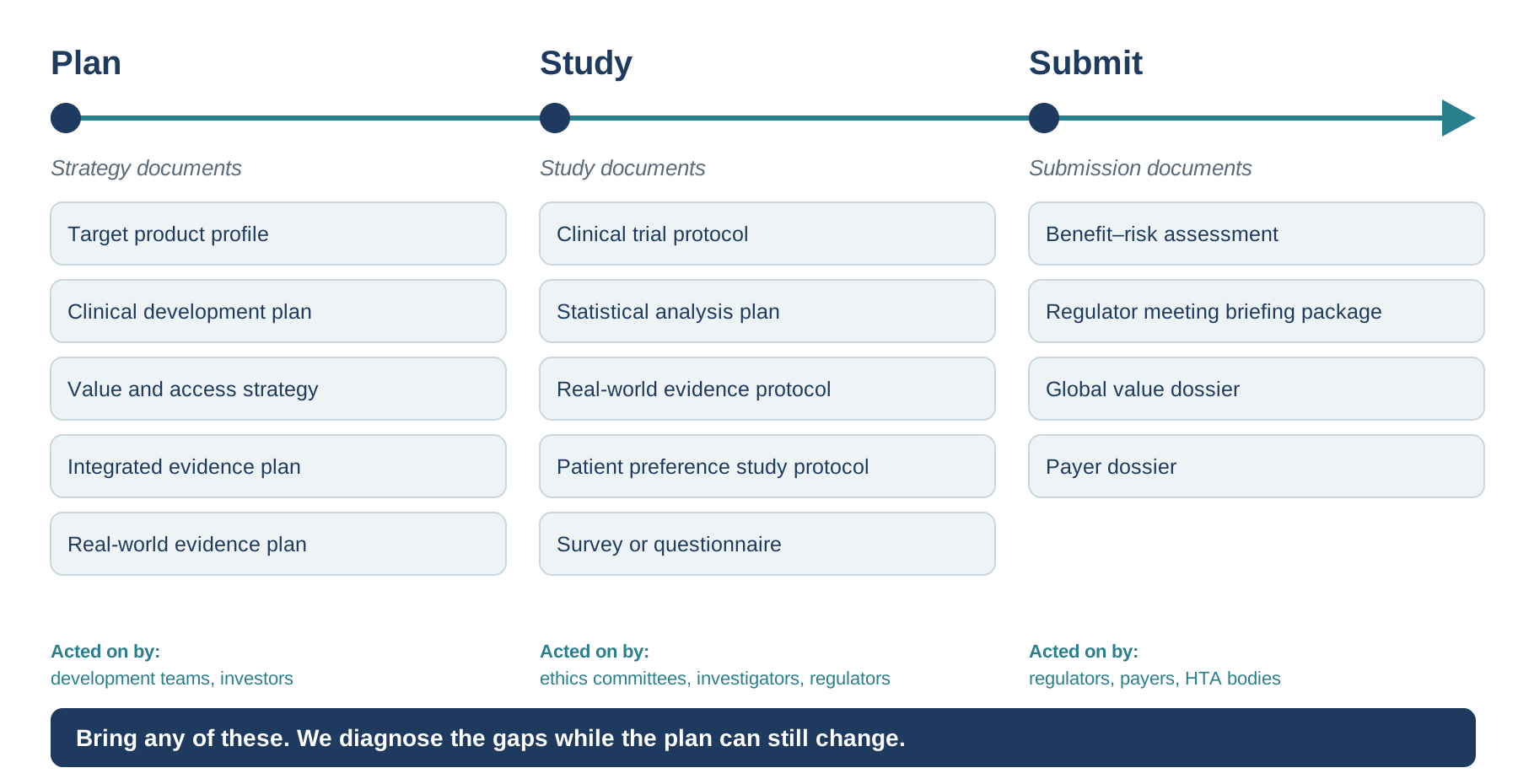
Start with what you already have.

Plan

Strategy documents

  • Target product profile
  • Clinical development plan
  • Value and access strategy
  • Integrated evidence plan
  • Real-world evidence plan

Acted on by: development teams, investors.

Study

Study documents

  • Clinical trial protocol
  • Statistical analysis plan
  • Real-world evidence protocol
  • Patient preference study protocol
  • Survey or questionnaire

Acted on by: ethics committees, investigators, regulators.

Submit

Submission documents

  • Benefit–risk assessment
  • Regulator meeting briefing package
  • Global value dossier
  • Payer dossier

Acted on by: regulators, payers, HTA bodies.

Bring any of these. We diagnose the gaps while the plan can still change.

For founders: your pilot plan or evidence roadmap is enough to start a conversation.

Where it helps most

When delivery is part of the evidence problem.

A new diagnostic step, infusion capacity, monitoring burden or a new care setting can determine whether a product is usable. We ask what evidence supports those delivery assumptions before the plan is locked.

The diagnosis reviews draft documents; design work follows as a scoped Pilot Partnership. PEL does not write or file regulatory submissions, run clinical trials or replace your regulatory function.

An inspectable argument · Essay

Why evidence fails to travel

An essay explores why evidence may be difficult to use when it does not address the questions and constraints of the people making a decision.

Steve Watt uses a heart-failure treatment example to examine the gap between clinical evidence and routine use. Read it for the questions that workflow, resources and decision responsibilities can add to an evidence plan.

This is an argument to examine, not independent evidence that PEL’s service improves outcomes.

Before the plan is locked

Leave room to change it.

Bring the draft before final internal review, before a protocol is finalized, or before a pilot begins.

Experience in benefit–risk assessment, patient preference research, regulatory submissions and integrated evidence planning informs the questions we ask.

Discuss your next evidence decision.

A 30-minute call to understand the decision, who makes it and what they need to see. If PEL is not the right fit, we will say so.

Request a call