Agree the decision
We identify who decides, when they decide and what they need to see.
How we work
Every engagement starts with a conversation. We agree the decision, deliverables, timing and fee before work begins. Diagnosis and design follow EvLander™, PEL’s approach to assessing how evidence will be received by each of the people who must decide on, deliver or use it. The early diagnosis described on our evidence design and communication pages is the starting point for a Diagnostic Sprint. A Diagnostic Sprint reviews a draft, identifies gaps and gives your team priorities for what to change or investigate. Use these pages to decide whether to request a written scope; commissioning requires a separate agreement.
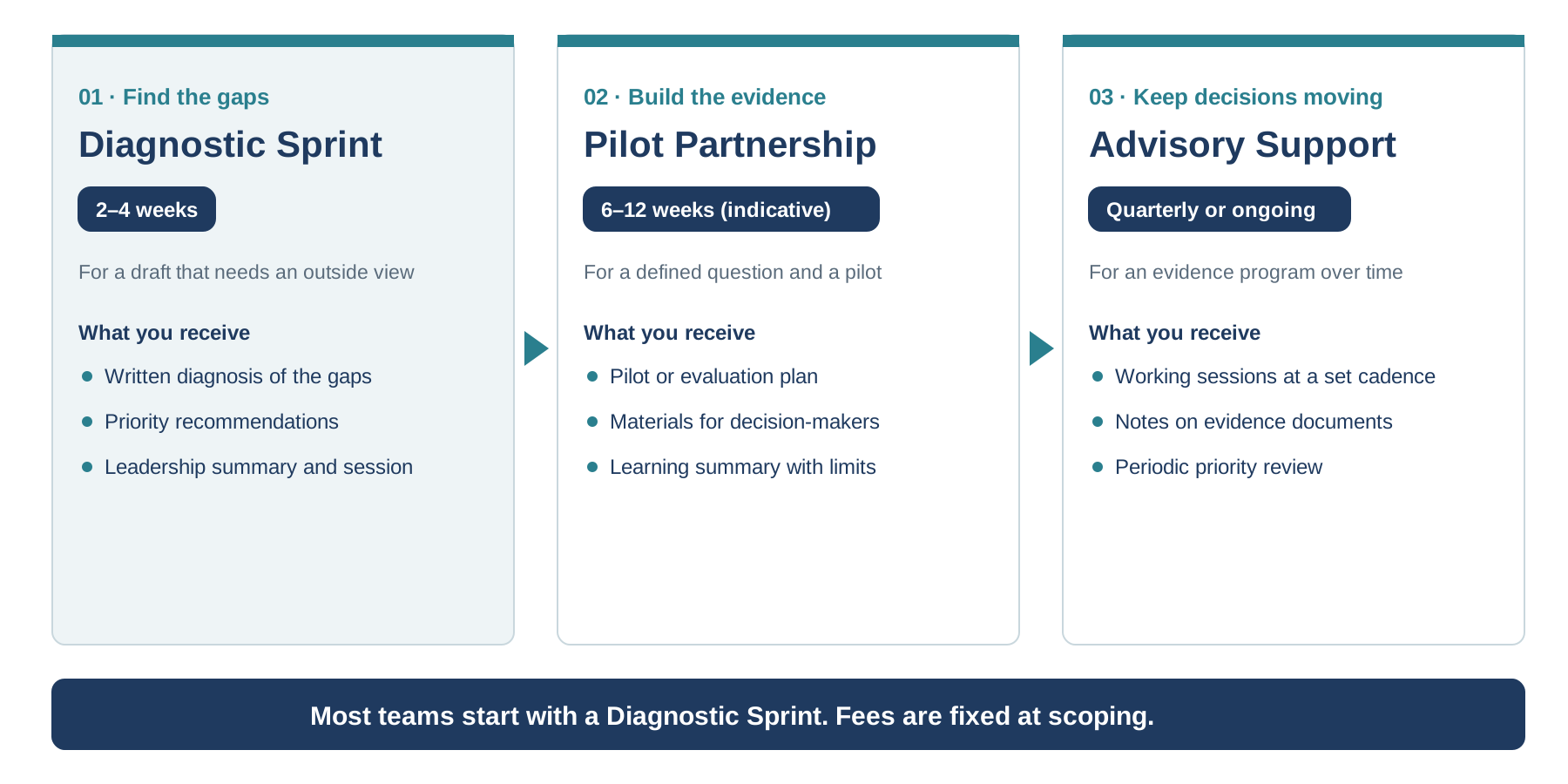
01 · Find the gaps
2–4 weeks
For a draft that needs an outside view
02 · Build the evidence
6–12 weeks (indicative)
For a defined question and a pilot
03 · Keep decisions moving
Quarterly or ongoing
For an evidence program over time
Most teams start with a Diagnostic Sprint. Fees are fixed at scoping.
01 · Find the gaps
2–4 weeks from receipt of materials
For a draft that needs an outside view before a decision, review or launch.
Understand where your evidence or content is exposed, and decide what to fix or commission first. We map who will judge or use the work, test the draft against their questions, rank the gaps and agree what to change, investigate or design.
The draft, the decision and its date, the people who will judge or use it, and one person who can answer questions.
The fee is fixed at scoping and depends on the material and the number of audiences. Raw-data re-analysis is included only if agreed. A clearer presentation cannot repair inadequate evidence; the recommendation may be to generate more.
02 · Build the evidence
Indicative timing: 6–12 weeks. The start date and schedule are agreed at scoping.
For teams with a defined question and authority to support a pilot or evaluation.
Design the work needed to address a specific gap, alongside the outputs that decision-makers will use.
Intended use, prior evidence, the decision the pilot must support, access to relevant users or data through agreed arrangements, and time and budget constraints.
Fees depend on the pilot and the audiences served. PEL designs and partners on the work; it does not act as a contract research organization or recruit participants at scale. Delivery roles and specialist statistical, regulatory or quality support are agreed before work begins.
03 · Keep decisions moving
Quarterly or ongoing retainer
For teams building an evidence program or product over time.
A recurring outside view, aligned with the decisions your team needs to make.
A conversation to agree the questions, review cadence, inclusions and term.
A retainer is agreed at scoping, based on meeting cadence and the number of documents reviewed. Specific turnaround times and access arrangements are agreed in the scope.
Across every engagement
We identify who decides, when they decide and what they need to see.
Deliverables, limits, timing and fees are set out before work begins. Before commissioning, confirm the written scope, price, availability, responsibilities, contractual terms and your organization’s approval requirements. A non-disclosure agreement is available where appropriate.
The output should help your team act without needing us in the room.
We advise on evidence and its use. We do not provide legal, medical or regulatory advice, or guarantee approval, reimbursement or adoption.
A 30-minute call to understand the decision, who makes it and what they need to see. If PEL is not the right fit, we will say so.